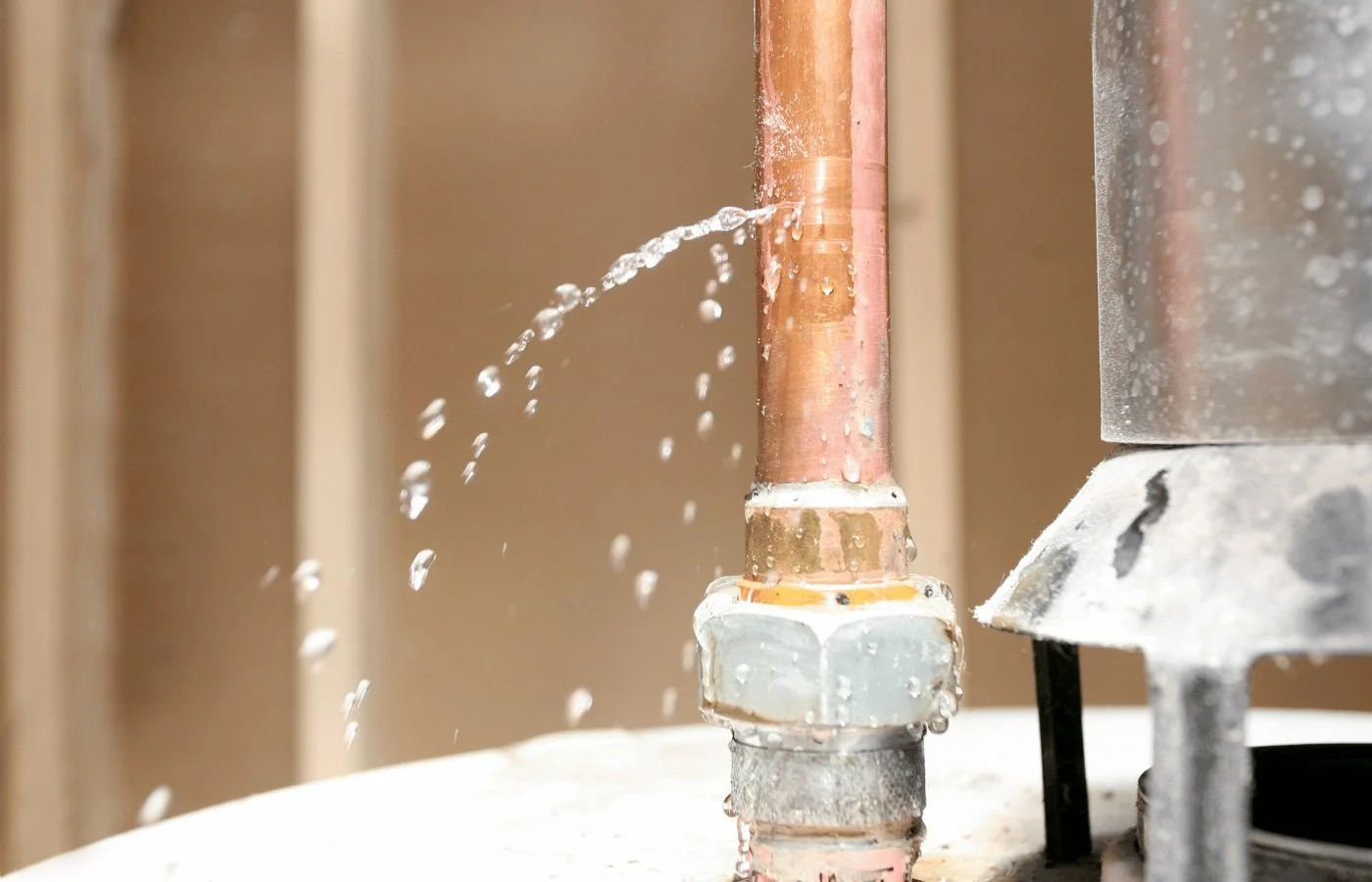
Geotechnical and Metallurgical Drivers of Under-Slab Breaks in Allen
Slab foundation plumbing failures in Collin County stem from the intersection of expansive soils and sub-slab construction methods:
Houston Black Clay Shrink-Swell Cycling
Allen's subsoil consists of high-plasticity clay that swells by up to 25 to 30 percent when hydrated and shrinks significantly during hot summer dry spells. This cyclic movement exerts differential bending and shear stresses on rigid under-slab copper lines that lack flexible expansion sleeves.
Direct Soil Contact and Galvanic Corrosion
In many homes constructed between 1980 and 2005, soft copper tubing was laid directly into gravel or native soil backfill beneath the slab without protective polyethylene sleeving. Chemical compounds in the soil react electrochemically with the copper, accelerating corrosion.
Sub-Slab Brazed Joint Failure
Codes require continuous copper tubing without mechanical joints beneath concrete slabs whenever feasible. However, underground brazed tee connections made during original construction often suffer from thermal fatigue, improper annealing, or poor solder penetration, eventually separating under ground movement.
High Water Velocity and Chloramine Erosion
Undersized supply lines carrying high-velocity municipal water experience internal turbulence. Combined with chloraminated treated water, this creates localized eddy currents that scour away internal copper protective oxides, triggering pinhole leaks.
Under-Slab Pipe Break Repair Methodology Comparison
| Repair Methodology | Structural Impact & Disruption | Cost & Timeline Profile | Long-Term Reliability |
|---|---|---|---|
| Direct Slab Penetration (Jackhammer) | High; destroys interior flooring, dust contamination | Moderate cost; 1-2 days execution | Addresses single leak; nearby aging pipe remains under slab |
| Exterior Under-Slab Tunneling | Zero interior damage; exterior pit alongside beam | Higher labor cost; 2-3 days execution | Direct access to repair pipe with heavy-duty sleeve |
| Overhead PEX-a Manifold Bypass | Zero slab or foundation impact; runs through attic | Cost-effective; 1 day execution | Permanently abandons vulnerable under-slab line forever |
| Targeted Line Rerouting | Minimal wall access; routes around perimeter beams | Moderate cost; 1-2 days execution | Safe, permanent bypass of compromised sub-slab branch |
Our 5-Stage Precision Slab Leak Restoration Protocol
Phase 1: Non-Destructive Hydrostatic Pressure Isolation
We isolate the home plumbing system and connect digital test gauges to confirm pressure decay on hot or cold domestic distribution circuits.
Phase 2: Electro-Acoustic Ground Resonance Mapping
Our specialists deploy high-gain acoustic ground microphones and correlation sensors across floor surfaces to detect the distinct frequency of pressurized water escaping through concrete.
Phase 3: Thermal Infrared Moisture Profiling
Using FLIR thermal cameras, we visualize sub-surface heat blooms created by hot water slab leaks or cool thermal plumes from cold supply line ruptures.
Phase 4: Engineering Method Evaluation & Surgical Repair
We evaluate whether an overhead PEX-a bypass or exterior foundation tunneling is the most cost-effective and structurally sound repair method for your specific floor plan.
Phase 5: Post-Repair Hydrostatic Verification
We subject the restored or bypassed piping loop to a sustained 30-minute pressure hold at 80 PSI to verify complete system integrity before closing access points.
Allen Neighborhoods Frequently Requiring Under-Slab Repairs
We routinely handle under-slab pipe break repairs in established Allen subdivisions with aging copper systems, including Watters Crossing, Twin Creeks, Bethany Lakes, Suncreek, Windridge, and older properties near downtown Allen.
Frequently Asked Questions
What are the telltale warning signs of an under-slab pipe break?
Common signs include warm spots on tile or hardwood floors, an audible hissing sound in bathrooms or hallways, a continuously spinning water meter, an unexpected spike in your water bill, or unexplained hairline cracks in drywall and foundation perimeters.
Is jackhammering my floor the only way to fix a slab leak?
No. In fact, we recommend overhead PEX-a bypasses or exterior under-slab tunneling in the majority of cases. Overhead bypasses route new piping through attic rafters, eliminating the need to break your finished interior flooring.
Will insurance cover the cost of under-slab pipe repairs in Texas?
Most Texas homeowner insurance policies cover the cost of accessing the leak (jackhammering or tunneling) and repairing resultant water damage, but exclude the direct plumbing repair itself. We provide itemized insurance-ready documentation.
How long does an under-slab leak repair take?
An overhead bypass is typically completed within 8 to 12 hours. Exterior tunneling and spot repair generally take 2 to 3 days from excavation to backfill and soil compaction.
Can a slab leak cause my foundation to crack?
Yes. Pressurized water pooling beneath a post-tension or monolithic concrete slab saturates expansive Houston Black clay, causing significant soil heave that bends foundation beams and cracks walls.
24/7 Local Emergency Service & Dispatch Information
When a water pipe breaks, delayed action escalates property damage and structural restoration costs. Contact our local Allen plumbing dispatch team immediately for certified pipe isolation, acoustic diagnostic locating, and permanent mechanical repair.
-
Company Name: Pipe Breaks Allen
-
Physical Address: 209 W Main St, Allen, TX 75013, USA
-
Emergency Telephone: (972) 472-8198
-
Service Territory: Exclusive to the City of Allen, Collin County, Texas (ZIP Codes 75013 and 75002)
-
Hours of Operation: 24 Hours a Day, 7 Days a Week, 365 Days a Year